
San Remo: 104 Years Later
On April 25, 1920, the Supreme Council of the Principal Allied Powers met in San Remo, Italy, to decide the future of the territories of the Ottoman Empire that had been defeated in World War I.
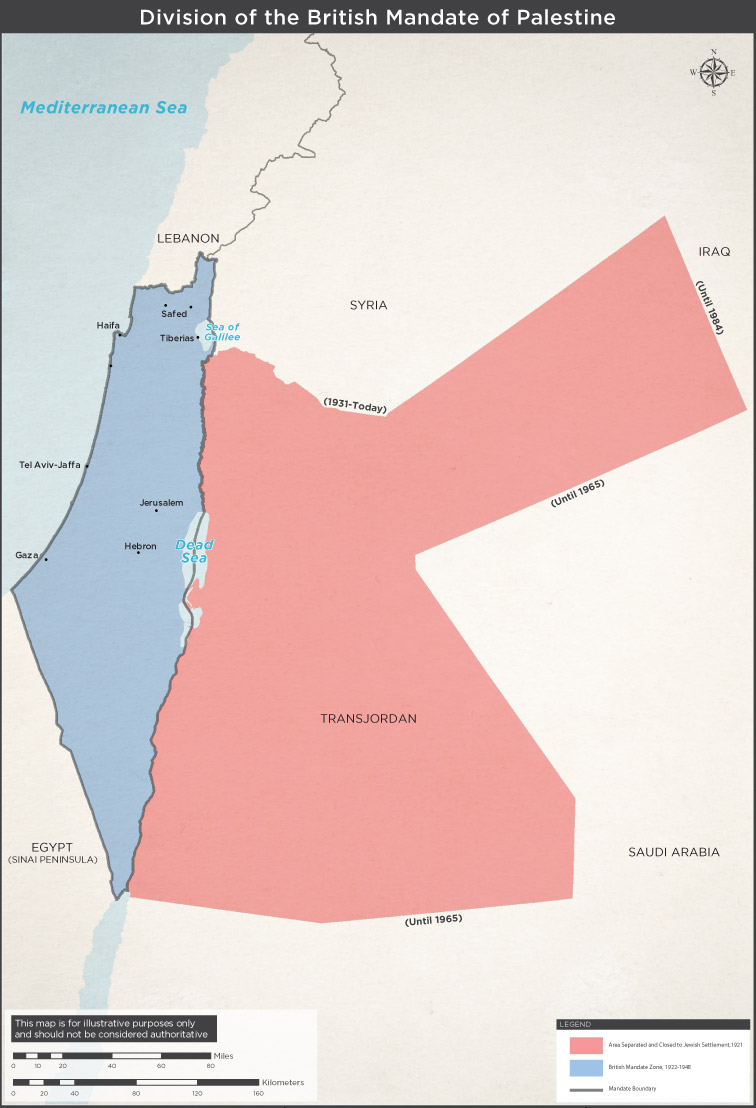
The San Remo Decision
The decision recognized the historical connection of the Jewish people with Palestine and the grounds for reconstituting their national home in that country. It also separated the Arab territories into independent states, including Syria, Lebanon, and Mesopotamia (Iraq).
The mandate did not end when the British left but when Jewish representatives proclaimed the state of Israel on May 14, 1948.
Thus, the goal of the decision in San Remo was achieved in the parts of the country that the Jews actually controlled.
Legally, the Mandate was formulated both as the administration of an estate and as a guardianship.
The British government had undertaken the responsibility both as administrator and as guardian until the Jews could take over.
The fact that an administrator or guardian runs away without completing the task they had taken on does not remove the rights that were supposed to be protected.
When the Mandate for Palestine was established in San Remo, it was for one main purpose: a future Jewish state.
All allocated rights therefore transferred to the state of Israel from midnight on May 15, 1948.
What is easily overlooked is that the Arabs were the group of people who by far received the most in 1920.
They also gained independence after centuries of Turkish occupation, with a total land area 500 times larger than the Jews!
International law expert Jacques Gauthier says: "For the Arabs, San Remo is so important that they should celebrate it every day."
But they don't.
Because then they would have to admit that the Jews were granted rights on par with themselves.
They are well helped to this "forgetfulness" by the UN.